 Einstein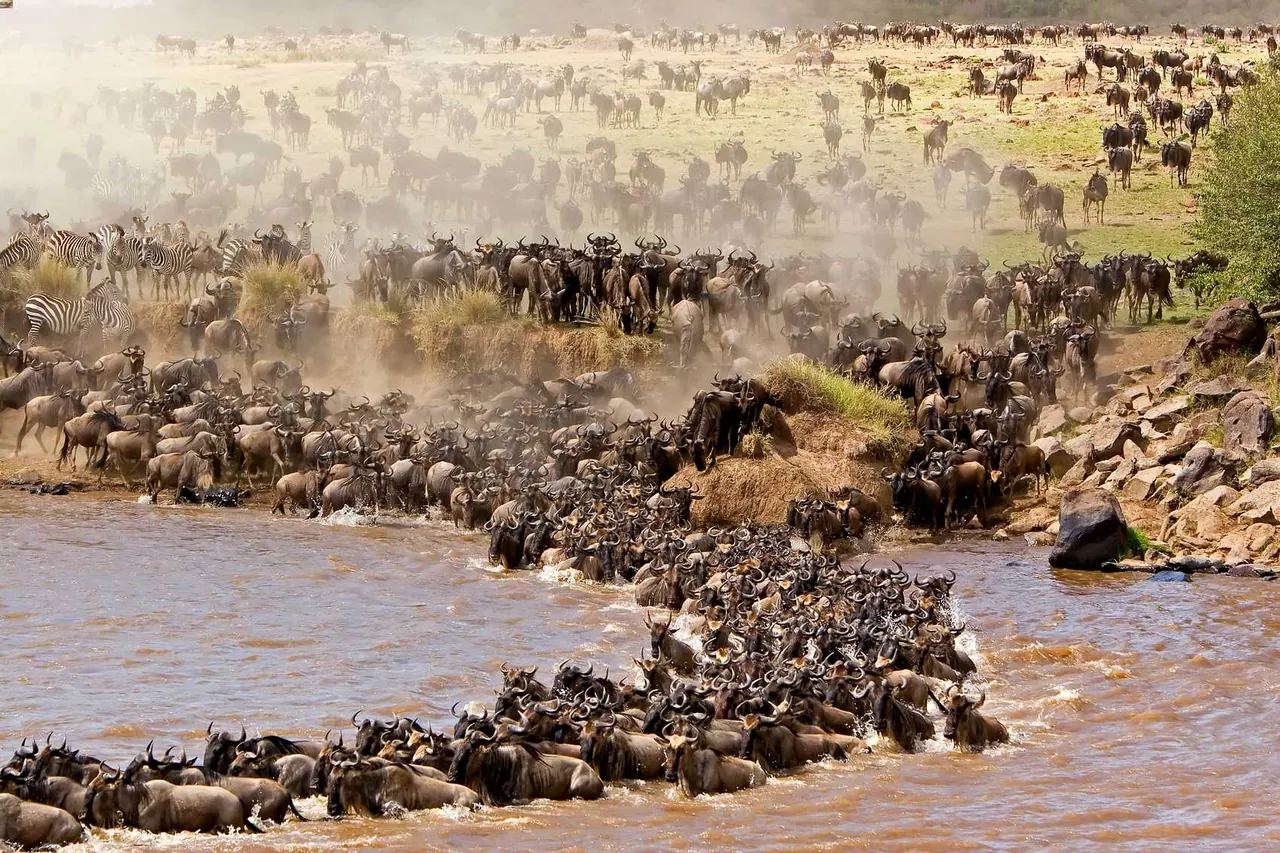
The Great Migration
More than a million wildebeest and zebra moving on a loop driven by grass and rain. It has no start and no finish, only a position on a given date.

The herds set the itinerary
Nobody plans a migration trip around a camp. You pick the month, the month gives you a sector, and the sector gives you a shortlist of camps. Booking a beautiful lodge in the wrong end of the Serengeti is the most common and most expensive mistake in East African travel.
A crossing is not a schedule
Herds gather at a bank in their thousands, hold for hours, and turn away. Then without warning one animal commits and the rest follow off a four-metre drop into crocodile water. Our northern Serengeti and Mara Triangle camps hold position at a crossing point rather than chasing radio calls, because the waiting is the only reliable technique there is.
Seen from above
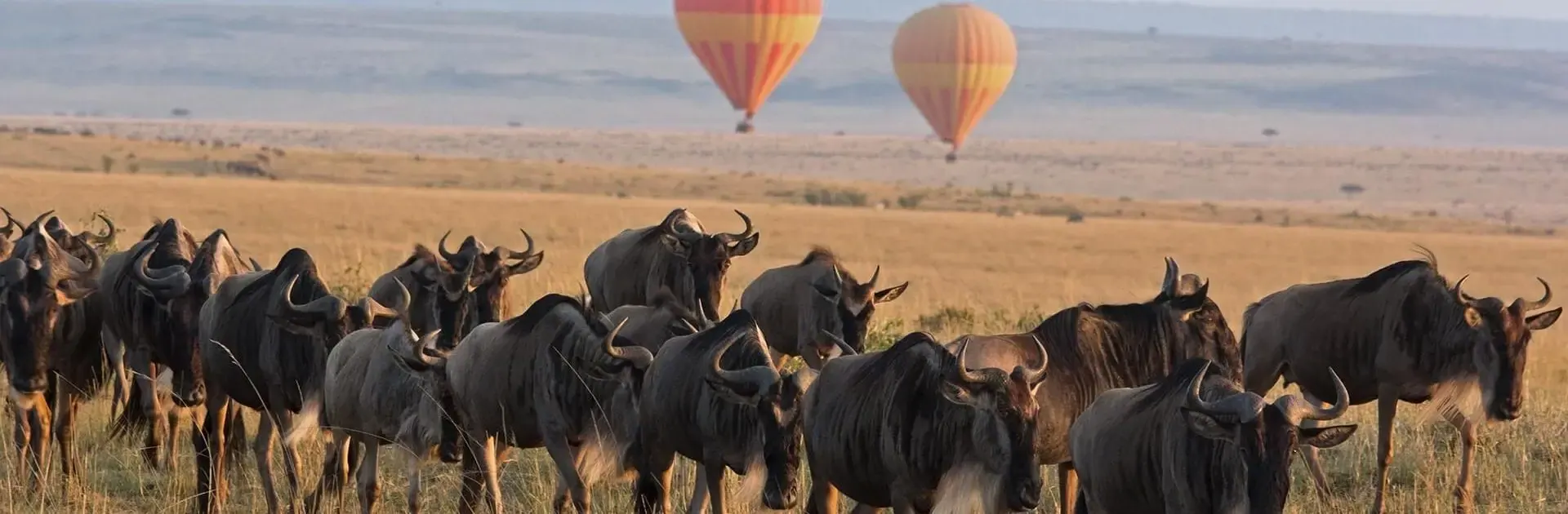
A balloon lifts before sunrise, drifts at whatever height the pilot needs, and lands for breakfast in the grass. It is the one way to grasp the actual scale of the herd, which from a vehicle simply reads as animals to the horizon.
Where is the Great Migration month by month?
The herds run a clockwise loop through the Serengeti and Masai Mara ecosystem. They calve in the south from January to March, move north and west through the middle of the year, cross the Mara River from late July to October, and drift back south on the short rains.
| January to March | Southern Serengeti and Ndutu | Calving. Around 8,000 births a day at peak, and the densest predator action of the year. |
| April to May | Central and western Serengeti | The long rains. Herds move north and west. Many northern camps are closed. |
| May to July | Grumeti, western corridor | The Grumeti river crossings. Smaller and less publicised than the Mara ones. |
| July to October | Northern Serengeti and Masai Mara | The Mara River crossings. Mid-August to mid-September is the most reliable window. |
| November to December | Moving south through the eastern Serengeti | Short rains pull the herds back down toward Ndutu. |
Can you guarantee I will see a river crossing?
No, and you should not book with anyone who says otherwise. A crossing depends on herd position, river level and animal behaviour on the day. What we can do is put you in the right sector in the right month, in a camp within twenty minutes of the crossing points, with a guide whose method is to hold position rather than chase. Allow three nights on the river rather than two, which roughly doubles your chances.
Is the migration better in Kenya or Tanzania?
Same herd, same river, different bank. Kenya's Mara side is cheaper to reach, has shorter internal flights and the best private conservancies in East Africa. Tanzania's Kogatende side carries fewer vehicles at crossings and far more wilderness behind it. From mid-August to mid-September the herds are split, which is the only time you can watch crossings from both countries on one trip.
Common questions
Prices and rules here were checked against the park authorities in August 2026. We reconfirm every figure before it goes on a quotation.
-
When are the Mara River crossings?
Late July through October, with mid-August to mid-September the most reliable window. Crossings require the herds to have reached the river and the water to be high enough to bottleneck them but low enough to cross. No operator can promise a crossing on a given day.
-
What month is best for the Great Migration?
For river crossings, mid-August to mid-September. For the calving and the heaviest predator activity, late January to early March in the southern Serengeti and Ndutu. Avoid April and May, when the long rains close many northern Serengeti camps.
-
Is the Great Migration better in Kenya or Tanzania?
They are the same herd crossing the same river. Kenya's Mara side is cheaper to reach and has better private conservancies. Tanzania's Kogatende side has fewer vehicles at crossings and more wilderness. From mid-August to mid-September the herds are split across the river, which is the only period you can see crossings from both banks on one trip.
-
How long do wildebeest river crossings last?
Anything from a few minutes to several hours. Herds can mass at a bank for an entire day and never cross, then cross three times the following morning. This is why we build three nights rather than two into the river sector of any migration itinerary.
Build it into a real route.
This is one part of a trip, not the whole of it. Tell us your dates and we will place it inside a route that works around the permits and the seasons.